

Written by Izzy Hughes
Art by Lily Anderson
Everybody is super worried about conservation these days (well almost everybody), especially in the mountains. There are all these rules now. When you do trail work, you have to make it look natural, like it came out of the Earth. You have to replant uprooted saplings and cover rocks with different kinds of dirt. You have to be certified to use an axe in a National Forest, and you have to ask the permission of like six people and four committees to alter ten feet of a trail. It is basically impossible to have a fire or shoot off fireworks anywhere cool these days. Christ, you’re not even allowed to fell trees up there, anymore! Well, obviously, the loggers are allowed. They’re bringing logging back, but it used to be super hard to cut down a single tree bigger than three inches in diameter. You can blame the damn endangered bats for that one. It’s getting a little ridiculous. Let me tell you about how it used to be.
In the good old days of the 1700s, a bunch of rich European settlers “found” the White Mountains and got super excited. The Abenaque people were less excited about this development, as you can imagine. These settler folk would just start walking with a machete and clear whatever path they wanted. Things were really kicked up a notch in the 1800s, though our story does not really begin until 1819, when Ethan Allen cut the Crawford Path through the Presidential Mountain Range in the White Mountains of New Hampshire. This was quickly followed by copycat trailblazers (literally), and, more interestingly, the construction of buildings! They just started building whatever they wanted wherever they wanted, the “where” of course being directly on top of the precious alpine vegetation found near the summits of the White Mountains. Sometimes they stopped a little short and set up camp in either the subalpine or the boreal zone. I suppose all that trekking and trace leaving tired them right out. They built huts—or cabins, depending on which mountain club you ask—and hotels, and stables on the summits of mountains. They demolished wildlife and precious vegetation. They clear cut acres upon acres.
Once, in 1899 a group of well off Randolphians (of Randolph, New Hampshire, of course) built a place called Spur Cabin about a mile below the summit of Mount Adams. Now, these Randolphians did not live in New Hampshire year round. That would be tacky! They were merely summer residents, so a few times a year they would hike up to their cabin in many, many wool layers. They hung out up there and brought up all their creature comforts—kettles and booze and hair pins and pack animals and their children—until one day they didn’t. They got bored of it in the early 1920s. They moved onto bigger and better things, like Gray Knob Cabin, which is another, slightly higher up cabin on Mount Adams.

Spur Cabin, sometime between 1900 and 1915 (Spur Cabin Registers: 1900-1915)
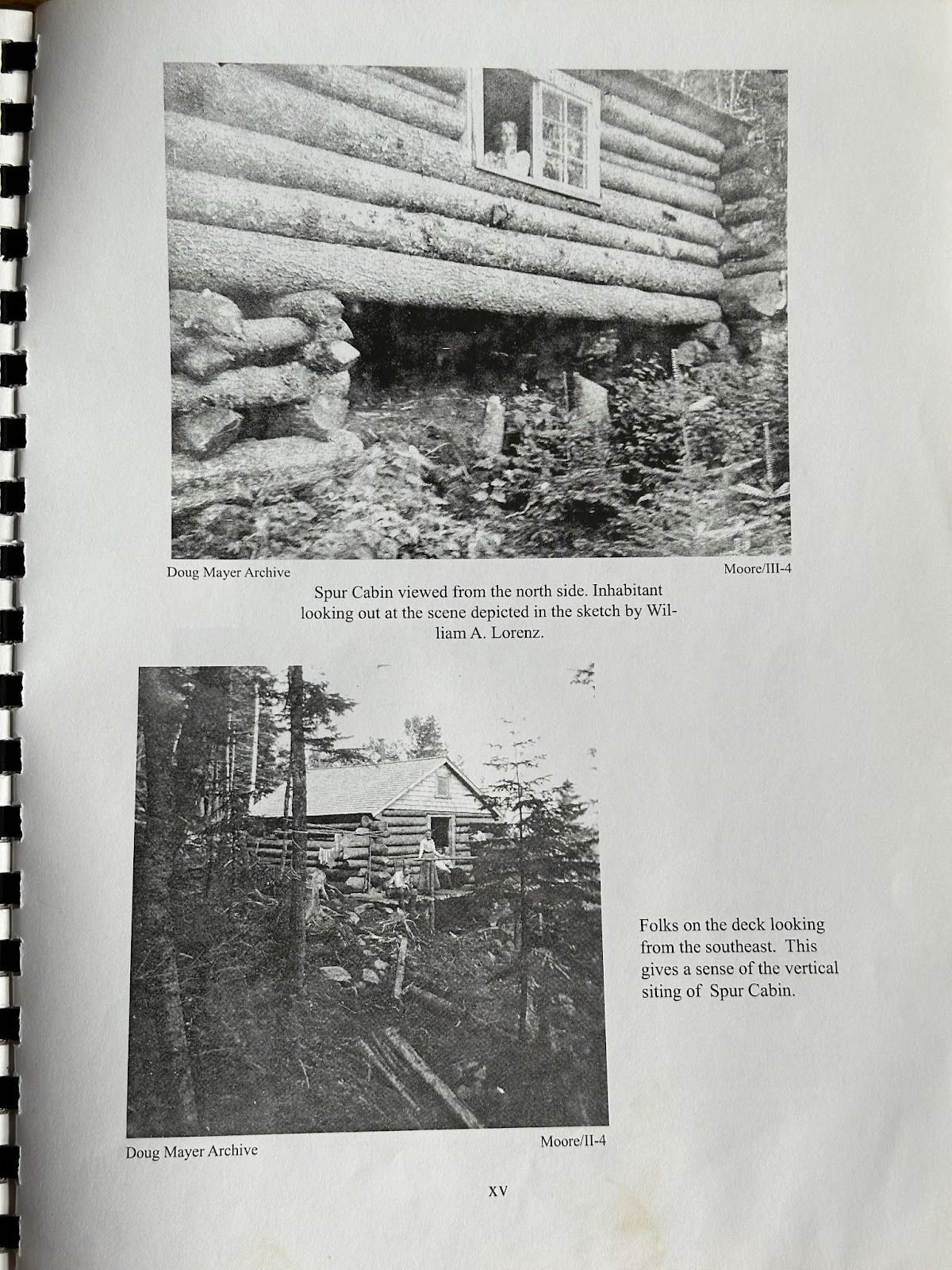
Spur Cabin, sometime between 1900 and 1915 (Spur Cabin Registers: 1900-1915)
Eventually, in 1929, the Forest Service decided it was time to be a hero. They were sick of these rich hooligans mucking up their forest. They did what no one else was brave enough to do: they burned it to the ground and left behind all the metal trash. In fact, it’s all still there today. God bless those men in green. We really dodged a bullet thanks to them. I do think it’s interesting that they are allowed to have fires, but I am not.
Not to say our dear, foolish hooligans did no wrong, but, to be fair, the White Mountains bounced back just fine. I’m not saying we should do everything they did. I am just saying, these mountains are a lot sturdier than they let on; we don’t need to baby them. I’m near certain that precious alpine vegetation is not even that precious. Hell, they’re absolutely swimming in the stuff out West. I heard a rumor that it’s actually encouraged to trample the alpine plants in California. I firmly believe that, in exchange for the seasons of work I have completed in “their” woods, the Forest Service should let me fell any three trees of my choosing and build a slip and slide on Crawford Path and collect a basket’s worth of their beloved alpine plants to use as materials for a tiny little fairy village I intend to build on Mount Moosilauke. I am really not asking all that much, and the Mountains will be fine. They’re really not that fragile.
You must be logged in to post a comment.