
Written by Avery Kelly
Art by Lily Anderson
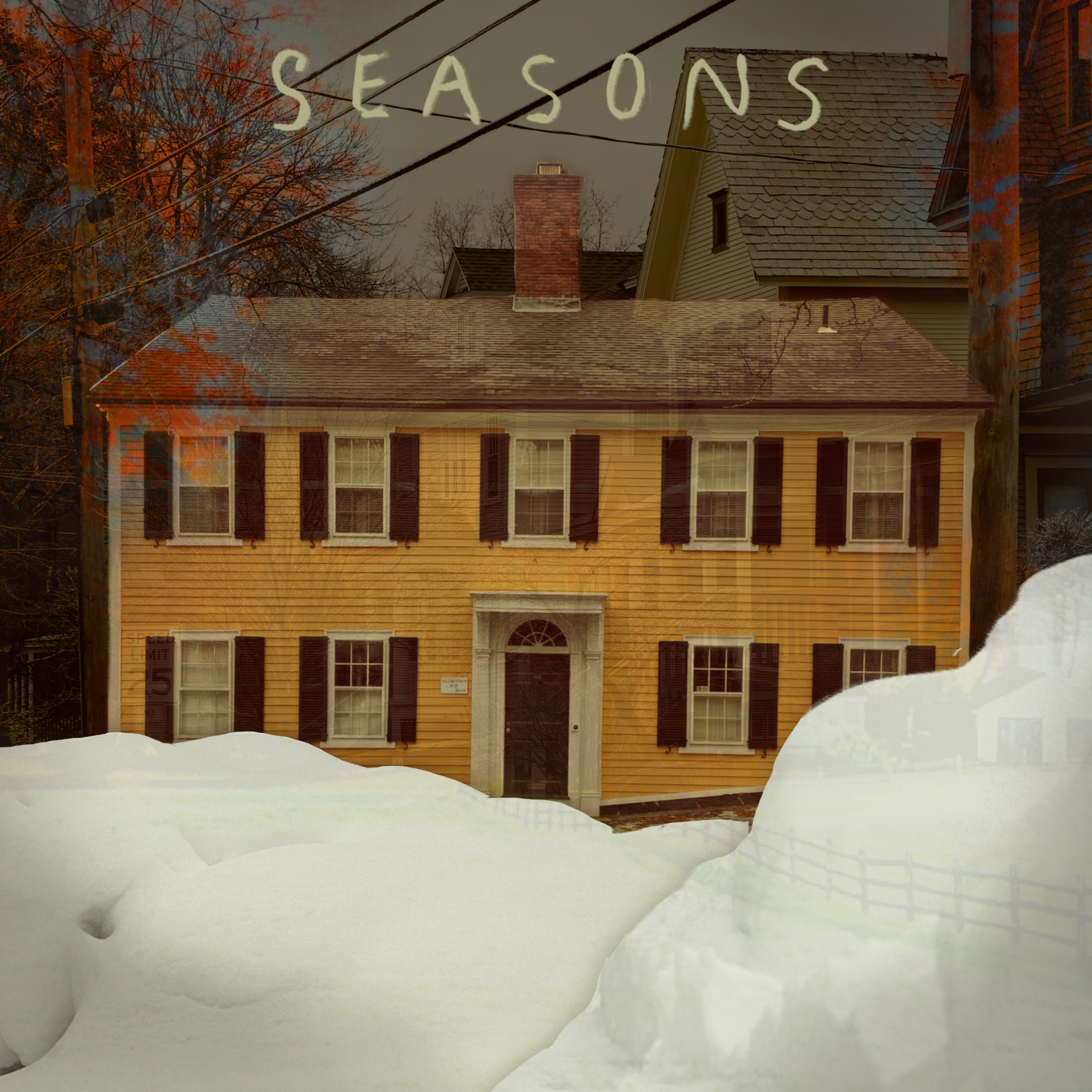
When I look out the window in the classroom of my college, I think about the houses sitting in front of me. They’re laid out in some confusing grid that the Queen City decided years and years ago. Long before big trucks found themselves lodged between other cars filled with scared college drivers. The houses here are old and mainly white, blending well into the backdrop of winter, and they contrast when the sky turns golden.
We had our first snowstorm, the first true one in a while anyway, so now the snow piles itself up against the white vinyl siding of the houses, burying the little basement windows that have never been good for anything other than the buildup of dust. Inside the houses, there is old wood threatening to splinter the hands that find themselves running along the grains. Yet still, the houses have sat and protected New England families for years and years in this city made of treacherous hills.
A similar story can be told in a different city than this. In a different state. But never outside of this Yankee land.
When I think of my little yellow house back home, I think of the cold. I think of the times when I threw myself into a snow pile below the porch while my mom shoveled. She’d tell me not to, but I didn’t care. I never cared about the so-called danger. I cared more about the feeling of the snow against my face that turned my cheeks pink, then red, and back to pink again as I sat in front of the woodstove. I cared about the numbness that I could feel against my face, down my sleeves, and in my snow boots. I cared about bundling up and bundling down in front of the orange glow of the woodstove, cracking as it burnt the wood we’d spent the fall harvesting, splitting, and stacking. I cared about the anticipation of entering my house and wondering if my mom had made me hot chocolate.
The snow has always been a reminder of my childhood. It’s a reminder of my New England life, of where I’m from, who I am.
When spring hits, in my little yellow house, I open my window in the morning and stick my ear to the mesh and listen to the sounds of the birds. Indigo buntings. Chickadees. Woodpeckers.
I miss listening. In the city of Burlington, I could press my ear to the mesh and hear a bird, a sound swiftly followed by sirens, exhaust, talking, yelling, and people. Our world is full of anthropic sounds where birds should be.
Back home, the summer comes, and the previously mud-buried grass reaches itself to the sun. It beckons the rays to help it grow, searching for motivation to keep going. The grass searches for light. The light that brings happiness and warmth.
New England summer serves a dry heat paired with a deep, cold ocean. In the summer heat, when sweat drips into my eyes and my lips, I imagine that I am jumping off the porch into a pile of snow. And in the winter, I wish for the sweat that drips into my eyes and warms me wholly. I wish for the sun that slowly heats me up, naturally, without work.
Fall comes and brings a cool breeze that slaps against your ears and reminds you of who you are. It reminds you of what’s coming. And as soon as the leaves turn red, they’re already falling off, and a snowflake chases them to the ground like the hare after the tortoise.
Fall never stays too long, she grows tired of our flannels. Fall is when we New Englanders enjoy our land and watch others use it. The city folk come up in droves to drive the Kanc or go to the Cape. They usually venture to Wells or Kennebunk, ignoring smaller, better beaches and economies.
The city folk would never stop at Rye. They never visit true Maine. Or New Hampshire. Or Vermont. They leave litter behind along with that sweet, sweet tourist money that has funded Northern New Hampshire for decades, and will continue to as long as Massachusetts and New York pave over their nature.
Fall reminds you that New England is not always nice. The end of fall and the beginning of winter pose uncomfortable temperatures. And we find ourselves back in the cycle. And then the seasons start again. And the cold comes. And we bed down like deer and stay close to home.
That’s the New England way.