
Written by Parker Rogers
Art by Lute Campbell
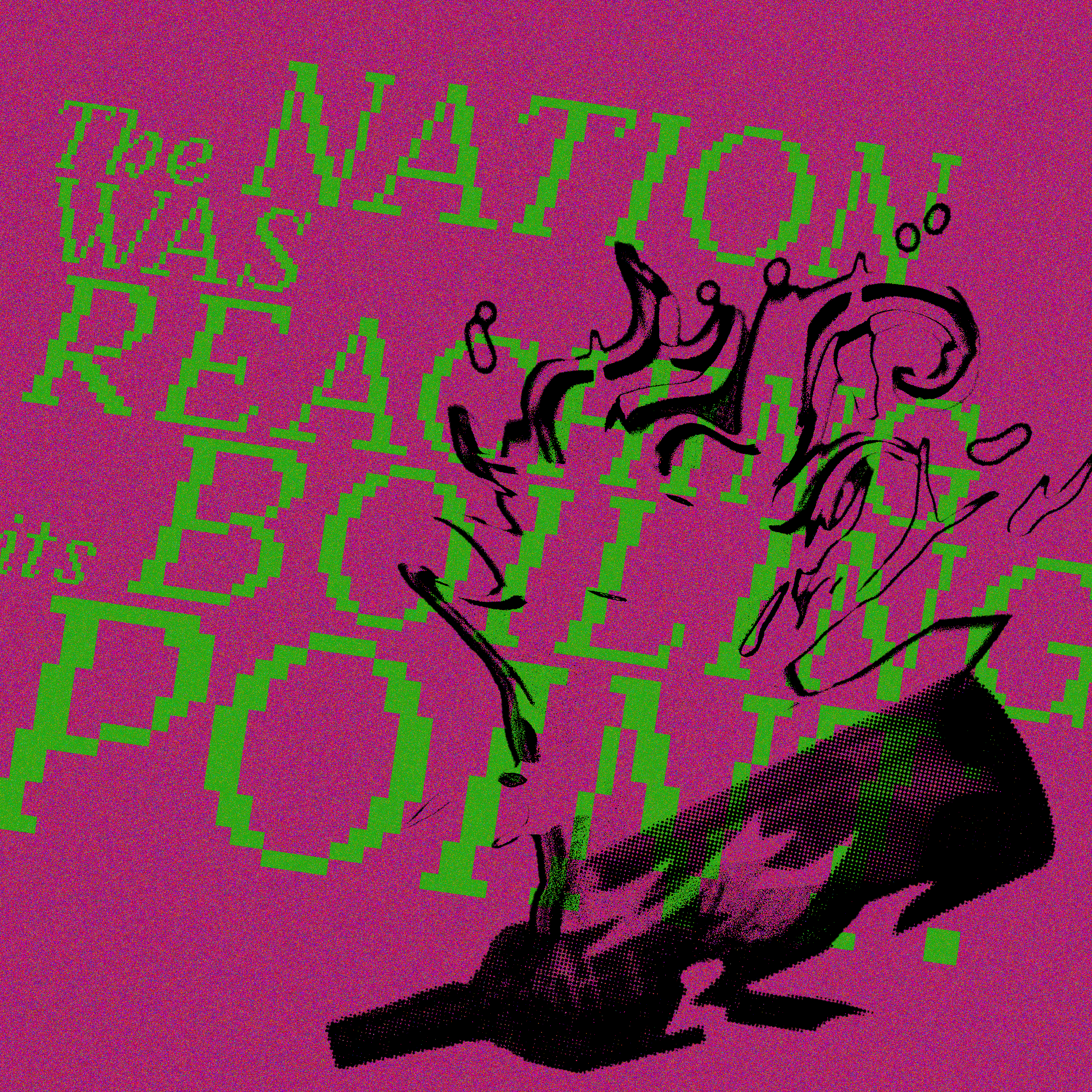
In the summer of 1969, the air in New York City was thick–heavy with humidity and bubbling social change. The Civil Rights movement was taking the country by hold, along with the Women’s Liberation Movement, Anti-war protests, and the Counterculture movement. The nation was reaching its boiling point, and was about to start spilling.
Not only were homosexual acts criminal at the time, but even after Stonewall and the social change that began with it, there were twenty states in the United States that had “sex psychopath” laws in 1971. Which allowed the detaining of homosexuals, and in Pennsylvania and California these “sex offenders” could be committed to a psychiatric institution for life. In seven states they could be castrated for their behavior.
The Stonewall Inn, located in Greenwich Village of New York City, was a bar that had been purchased by the Genovese family in 1966, who intended to turn it into a gay bar. The bar had no running water, so they would clean glasses by dunking them into tubs of water, dry them quickly, and use them again. They considered fire exits to be of no concern, had no liquor license, the toilets seemed to be overflowing constantly, and drugs were sold in the back. They had to pay off the cops on a weekly basis, and to get into the bar, one either had to know you–or someone you were with. Or you had to look real gay.
The walls were painted black, and black lights pulsed over the dance floor through cigarette smoke. The regular lights only came on when the cops showed up, which was a regular occurrence. At the time this was the gay bar to be, everyone went to Stonewall. Whites, blacks, hispanics, there was even a whole room in the back where the Queens would hangout.
The Tensions Rising
The United States was afraid of change after World War II, and many wanted things to just go back to how it had been before the war. Communism was a term being thrown around that could be used to rid communities of anyone who didn’t fit their image. Joseph McCarthy, US Senator at the time was conducting hearings to look for communists in the government at this time. He was throwing anarchists, queers, and anyone they considered Un-American in jail. This “threat of communism” allowed them to attack whomever it was they wanted. Between 1947 and 1950 there were over 1,700 federal job applications denied, 4,380 people were discharged from the military, and over 400 were fired from their jobs all because they were suspected homosexuals. All of this is now referred to as the Lavender Scare.
Bars that were found serving queers and anyone in the community were shut down; customers were arrested, and ran the risk of losing their jobs, apartments, and being exposed in the newspapers. The World’s Fair, an international fair that showcases a country’s achievements, went to New York City in 1964, marking the increasing tension. Mayor Robert Wagner Jr. was making serious efforts to rid New York of its queer population; just the thought of queers and straights walking on the same sidewalk bothered the Mayor. He increased the busts done on gay bars, and the following years held that same energy.
The Boiling Point
The riots took place on June 28, 1969. At 1:20 AM two patrol officers in uniform pulled up to the Stonewall Inn and announced the raid. The employees of the bar had not been tipped off about the raid, which was very uncommon. Usually if you paid the cops they would at least let you know when they were coming to raid you.
There were roughly 200 people in the bar that night, some of which had never been in a police raid before, or even to the Stonewall. They booked it for the doors, attempting to leap out the bathroom windows, but this proved futile.
This time, however, things were different. The men refused to hand over their identifications, and the women refused to go with the female officers to have their sex verified–something that would typically result in the arrest of trans women and drag queens.
Tensions truly began to rise when police officers began to feel-up some of the lesbians attending the bar that night while frisking them.
When the cops released those who weren’t being arrested they formed a crowd outfront. Something that was also a-typical. Usually people dispersed, getting out of anything hairy. But patrons remembered that there was power in numbers. Within a few minutes there were several hundred people gathered out front, some just joining in off the street.
By the time the first patrol wagon arrived the crowd was ten times the number of people who had been arrested. While the crowd of patrons and onlookers watched those being arrested, some screamed out “Gay power!” and “We shall overcome,” in a collective.
Resentment was running through anything conductible like electricity escaped from a live wire.
Someone shouted that the cops were raiding the place because the bar hadn’t paid them off, someone yelled back “Let’s pay them off then!” and they began throwing coins at the cops. They then watched in horror as the cops clubbed a drag queen. The rumors of cops beating those inside spread throughout the crowd, and coins turned to bottles. When they watched a woman get dragged out of the bar while putting up one hell of a fight, she screamed to the crowd “Why don’t you guys do something?” and the violence broke out. They threw whatever they could get their hands on, bottles, Molotovs, bricks, they eventually found a construction site nearby and began hurling whatever they could find there. They turned over police wagons, slashed tires, they dug up a parking meter to ram the door–it was madness.
The cops made efforts of little success, the crowd had grown to over 500 people, they were seriously outnumbered. They did their best, but for every person they knocked down they sparked a violent rage in ten others. They even tried to use a firehose against them, but even that could not deter their anger. It was these actions of the police that galvanized otherwise peaceful patrons of the bar.
Sylvia Rivera, equal rights activist said about the night: “I’m glad I was in the Stonewall riot. I remember when someone threw a Molotov cocktail, I thought: ‘My god, the revolution is here. The revolution is finally here!’”
One of the people who had found themselves wandering over to the bar was Dave Van Ronk, activist folk singer and mentor of Bob Dylan. He’d participated in various antiwar demonstrations, and said about Stonewall, “As far as I was concerned anybody who’d stand against the cops was all right with me and that’s why I stayed in… Every time you turned around the cops were pulling some outrage or another.” He was the first of thirteen to be arrested1.
Everyone could feel in the air years of injustice, abuse, the isolation they had been forced to bear, it all came to a head that night.
A fire broke out inside of Stonewall, there were rumors it was the patrons who had started the fire, there were rumors it was the cops.
When the crowd busted through the plywood covering the windows of the bar the cops took out their weapons, threatening those in the crowd. Howard Smith, who was being held inside by the cops, grabbed a wrench and stuffed it down his pants. He had no idea if he would have to defend himself from the cops or the mob. Things had turned into pandemonium. It had been 45 minutes since the cops first arrived.
In the background the crowd was being riled up even more by the Women’s House of Detention down the street, the women and trans-masculines who lived there began setting fire to their belongings, and throwing them in the streets while they shouted “Gay rights! Gay rights!” The mob was brawling the cops in the streets.
The Tactical Patrol Force arrived after a cop’s eyes had been cut out. The cops were being humiliated in ways they seldom experienced. Bob Kohler, a NYC resident walking his dog by the riots said “They were angrier than I guess they had ever been because everybody else had rioted… but the fairies were not supposed to riot… no group had ever forced the cops to retreat before, so the anger was just enormous. I mean, they wanted to kill.”
The cops took to marching down the street in a phalanx, but the crowd only mocked them in response. Shouting back at them to the tune of “Tra-ra-ra Boom-de-ay!” They sang “We are the Stonewall Girls/ We wear our hair in curls/ We don’t wear underwear/ We show our pubic hair!” They kicked their legs high towards the stars, staring down cops who swang clubs and were out for blood.
When the cops tried to chase them they’d circle the block so the queers were the ones chasing the cops. They rammed the doors of the Stonewall with a parking meter they’d unearthed. The riot went on for hours, only beginning to settle at four in the morning. Those who hadn’t been arrested sat around the neighborhood on stoops, or in local parks. They were amazed by what they had done. There was an eerie feeling in the air, a quietness fell over Greenwich Village, and suddenly the only sound was the buzzing electricity of a budding movement.
By the night’s end thirteen people had been arrested, four police officers had been injured, and there were several hospitalizations from those in the crowd. Everything inside the Stonewall had been smashed to bits.
Aftermath
The story was on the front page of the Daily News by the next morning and was also covered in the New York Times and the New York Post. By afternoon the Stonewall Inn was covered in graffiti as the rumors of what had gone down spread through Greenwich Village. The walls read: “Drag power,” “They invaded our rights,” “Support gay power,” “Legalize gay bars,” and lastly, “We are open!”
The riots continued the next day and for days to come. What most people took away from this night, however, was not the violence, but the displays of queer affection in public. They had gone from sneaking into bars to dance in secrecy to standing out in the streets proud.
Thousands gathered that second night in front of the burnt carcass of what was once Stonewall. The streets were packed tighter than sardines.
Marsha P Johnson, drag queen and activist climbed a lampost, dropping a heavy bag onto a car below–shattering the windshield. The night followed a similar pattern after that as they had from the night before. Fires were lit, the kick lines started once again. This time however, the police showed up with over a hundred officers. Still, the queer community held their own. When the police would try to capture people the mob would rush in and try to capture them back. They went back and forth like this with bodies in the crowd, it became one deadly game of capture the fag.
In the days following things died down a little, but the riots continued on for another four days, lasting six nights in total. Public opinion on the night’s events was mixed. Those who had worked hard in the 60s to prove queers were no different than straights felt the night was an embarrassment. Many, however, felt the old methods no longer worked. Those methods were too mild compared to the violence the police had shown them at Stonewall.
Following this the Gay Liberation Front was formed, the first organization to use gay in the name. They aligned with black and anti-war groups before shutting down. Following them The Gay Activist Alliance was formed, taking sole focus on queer issues.
Despite the attention Stonewall drew, police raids against gay bars did not end in this country. The arrests continued on and with those deaths. Within a few weeks the Stonewall Inn was put up for rent. The years following the bar had a rocky history, but today it is still open on Christopher Street in New York City, and is still a gay bar.
The next summer Christopher Street Liberation Day was held on June 28, 1970 in New York. There were also marches in Chicago and Los Angeles. Many consider this to be the first pride march in the US. The following year, 1971, marches were held in Boston, Dallas, Milwaukee, London, Paris, West Berlin, and Stockholm. The New York march spanned 51 blocks that year, from Christopher street all the way to Central Park. Every year following the parades have begun to spread to cities all over the world.
While Stonewall is often considered the first Pride, it emerged from the broader social movements of the 1960s. Early queer liberation groups fought not only for LGBTQ+ rights but for all oppressed people. The Gay Liberation Front declared solidarity with movements for racial, economic, and anti-imperialist justice, recognizing that true sexual liberation required dismantling oppressive institutions.
Stonewall holds an immensely moving narrative, one which shows queer individuals in their history. It was a group of individuals who were enjoying themselves at a bar one evening, it could have been any of us should the times be different. There was no group to join, no premeditation, it was simply queer individuals fed up with their night on the town being ruined. It gives us a sense of collective, a sense of how utterly easy that could have been me, us.
It is a story of hope that unites queer individuals worldwide. More than the start of Pride, it serves as a reminder that change is possible when the right people take action at the right time.
It caused people to organize, it was the spark that lit the flame, but it was the flame that burned the forest
“Whether we realize it or not the reason we commemorate Stonewall today is because after the rioting, many gay men and lesbians chose to do something–organize.”2
One of the most beautiful aspects of the riots was the spontaneity of it all, there was no larger organization backing them, none of it was planned. It was a collective of people being fed up with being mistreated and fought back. There was simply no patience left to hold.
The Stonewall Riots occurred less than sixty years ago, and while things shift in our world it is important to remember in less than one lifetime how far the pendulum has swung, and to never forget how far–and how quickly–it can swing back. Never stop fighting for the rights of all people. Never give up on yourself, the ones you love, and the rights all of us as humans deserve.
As a trans person, learning about the history of Stonewall—and the broader fight for LGBT+ rights—was gutting. It made me realize just how little I was taught about my own history. The deeper I dove, the more I uncovered about who truly fought for my rights, who made my freedom possible. It changed how I see the world—how I vote, who I align with. It confirmed what I had already begun to understand: we must take our rights into our own hands. In moments of fear, when uncertainty rises like a tide, I turn to our history. I remind myself that I do not carry the same privileges as even my own family. That there are times when we must stand. When we must fight, even when we long to rest. We owe it to those who fought before us. I owe it to those who fought for me—knowing they would never meet me, never love me, never look me in the eye, yet still chose to fight.