
Written by Jordan Douglas
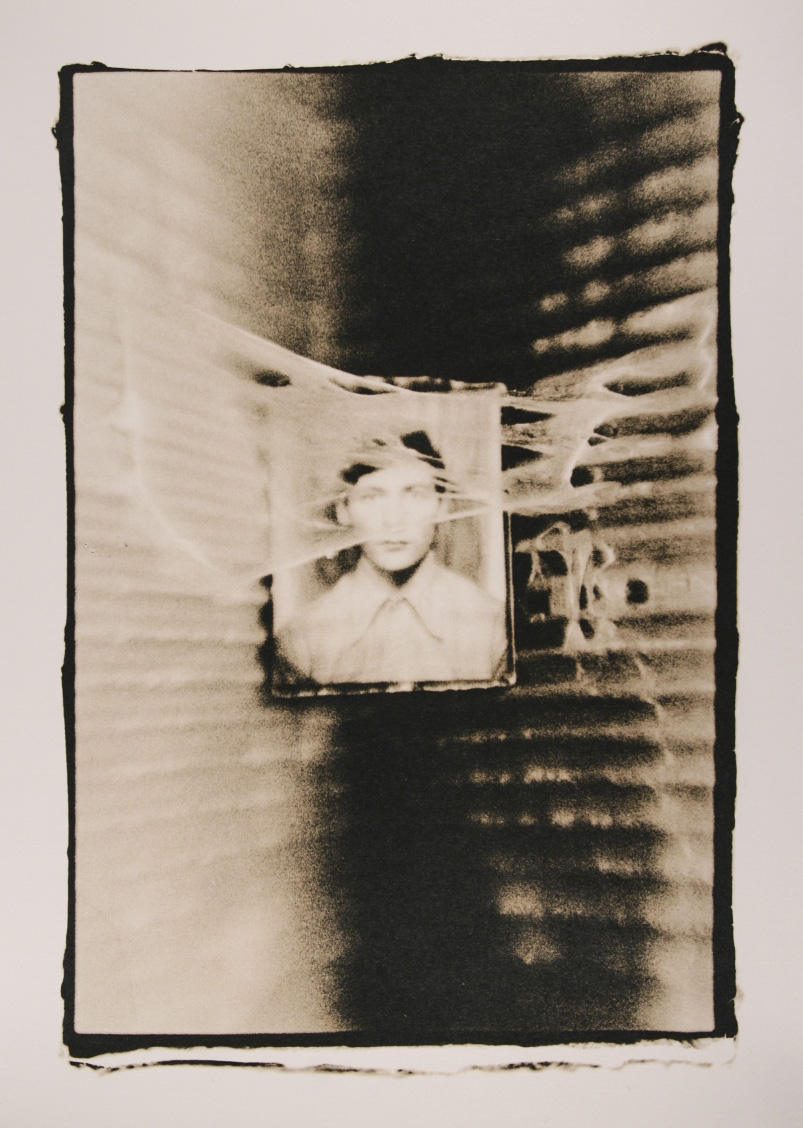
Cover image by Valentina Bardakova
As the academic year concludes, I’d like to take a moment to appreciate the creative niche that the darkroom has provided for Champlain College. I have been teaching both the introductory and intermediate darkroom courses for 19 years and have witnessed hundreds of students grow beyond the basic building blocks of the medium to produce mature and dimensional bodies of photographic work. Each semester, I’ve asked my classes why they signed up for an analog course with outmoded technology. Why use silver gelatin film that offers only 36 exposures, where one cannot see the shots until after the roll is processed, and go into a room with red “safelight” to use decades old enlargers and make black-and-white prints by hand? Is this aging mode of expression still meaningful? Students respond with how excited they are to put aside their devices, go offscreen and use their hands to create. Analog photography invites one to slow down and become more specific. With the suspension of knowing the strength of one’s shots, the photographer must learn to control the variables and earn their image. The variabilities of chemistry and process afford outcomes not possible with digital photography. It is often the unplanned effects, through accident and experimentation, that become the most compelling.
The darkroom contains a kind of magic, noticeable as an image appears in the tray of developer within the soft orange light and felt in the meditative pace of its process-driven tempo. Dillon Toole, adjunct professor and Senior Coordinator at the Rental House, recently reflected on his days as a photo student, “the Darkroom at Champlain became a refuge for insight, growth, and creativity like few other places on campus. During the countless afternoons and evenings I spent there, I recall one powerfully simple thing: All the worries and stresses of student life seemed to fade away. Even time itself appeared to stand still.” Toole is currently teaching Advanced Cinematography–which is, of course, founded on the understanding of still images.
Last year, I had the pleasure of overseeing 3 classes of darkroom students, across 2 semesters, as they engaged with Champlain’s Urban Renewal Project, a multi-disciplinary assessment of the upheavals of Burlington’s downtown as part of a federal humanities grant. The culmination of the project was an exhibition and public presentation on November 30, 2023, which featured 18 matted and framed darkroom prints that reflected the student photographers’ experience of place.
The darkroom, located in the Photo Lab on the first floor of the Joyce Learning Center, is an important resource for many. Jae Badaracco, a Creative Media major and student worker at the Photo Lab, shared, “One of the driving factors for me to apply to Champlain was the film photography classes and the access to the darkroom. They have been a huge asset to me in my personal creative practice, as well as projects for my other classes.” Jae’s sentiments were echoed by Camden Mendik, a Secondary Education major, who was drawn to Champlain because of its functional and integrative darkroom and photo lab–which has a scanner and an iMac, allowing students to transfer film, both black-and-white and color, as well as analog prints, into digital files that can be edited with Photoshop or Lightroom.
Due to budget restructuring, the darkroom courses will be placed on an indefinite hiatus. When the news came down, in February, several students felt compelled to express their disappointment. Sophomore Filmmaking major, Walker Mack wrote, “Not only is darkroom photography a unique and increasingly rare art form but discontinuing the associated film photography classes would remove a valuable space for students to collaborate, critique, and socialize in a creative context.” Although the courses will not be offered for the foreseeable future, Walker, along with sophomore Graphic Design and Visual Communication major Alex Clark, Jae and several peers, have petitioned to create a Darkroom Photo Club, so that they and anyone interested in using the facility may have access. Robin Perlah, Program Director for the master’s programs in Emergent Media and Assistant Professor in the Division of Communications & Creative Media, has generously offered to be the club advisor. If approved by the S.G.A., the student-run club will have a budget to purchase film and supplies and offer instructional sessions. Fingers crossed that it will be established for the next academic year!
Perhaps darkroom photography classes will be offered once again, as the college continues to transition. For now, as I prepare for my last final critique for the Intermediate Darkroom class this week, I bid a fond farewell to Champlain College. My head is full of student images, my spirit is buoyed by the creative sparks ignited by this time-honored endeavor, and my heart swells with gratitude for having the opportunity to steward such a remarkable locus of joy, personal growth, and expression.
Jordan Douglas is an Adjunct Professor at Champlain College in the Division of Communication & Creative Media and Photo Lab Supervisor.


You must be logged in to post a comment.